 Duluth Water Leak Detection Pros
Should You Get a Leak Inspection Before Buying a Home in Duluth?
Buying a home in Duluth, GA, in ZIP codes 30096 and 30097, is the one time a hidden leak is cheapest to find — before closing, while the seller still owns it. A leak inspection checks the meter, slab, walls, and underground lines for signs a walkthrough misses.
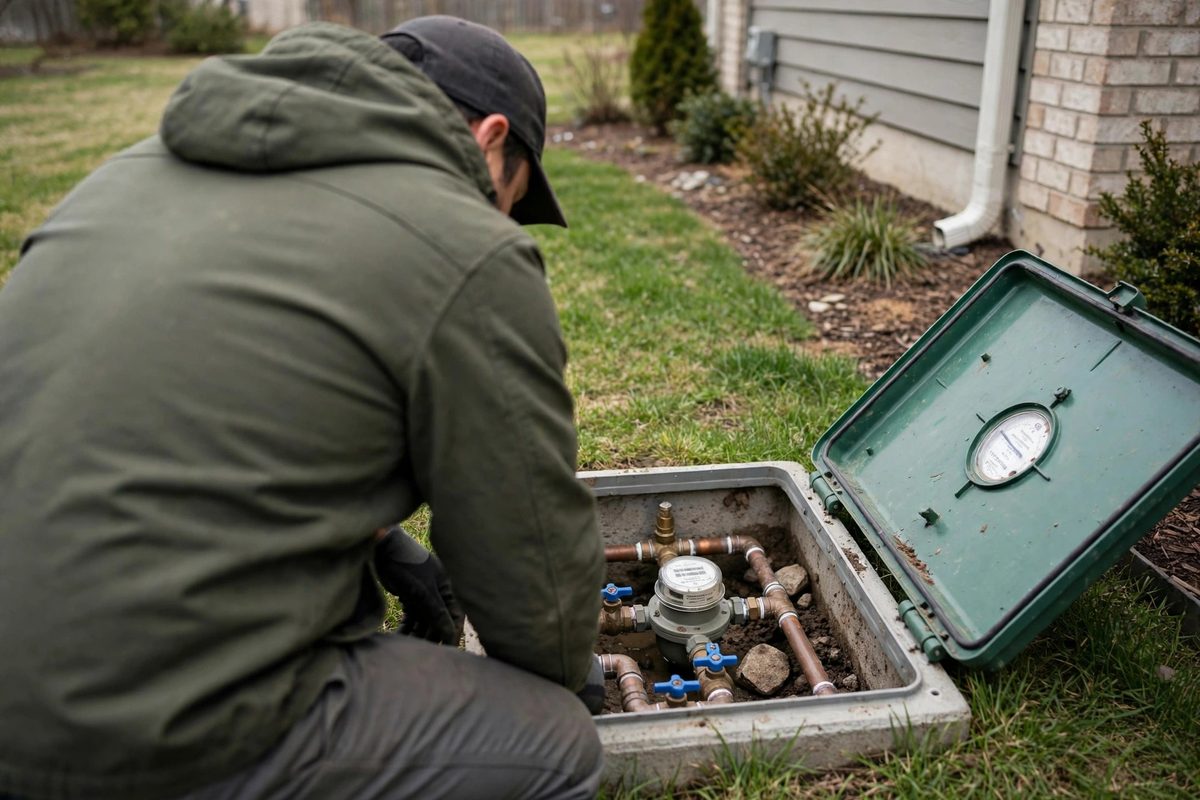
A home inspection covers a lot, but it is usually visual: what can be seen on the day, in the rooms that are accessible. A hidden leak, by definition, cannot be seen on a walkthrough. It shows as a meter that moves, a warm patch on a floor, a faint stain behind furniture, or a bill spike in the seller's records — none of which a standard visual inspection is designed to catch. That is the gap a leak inspection fills, and it is worth filling before closing, when the cost of a leak still belongs to someone else.
What a pre-purchase leak inspection checks
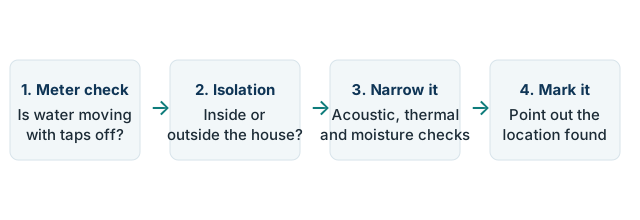
- Meter test. Everything off, meter read, then read again. Movement points to a supply leak somewhere in the property.
- Slab and floor check. Warm or damp patches, flooring changes, and any sign of a slab leak, which is the costliest hidden leak to repair after purchase.
- Walls and ceilings. Stains, bubbling paint, and musty spots, separated into plumbing, roof, and condensation causes — the same three-way split used on the ceiling leak detection page.
- Underground and water line. Soggy patches, greener grass in one area, and any sign of a line leak between the meter and the house.
- Report. What was ruled out as well as what was found, so a buyer, an agent, and a seller can all read the same document.
The report matters as much as the checks. A report that says “no leak found” with the meter result behind it is useful. A report that says “inconclusive, next check named” is also useful. A report that guesses is not — and neither is a verbal assurance with nothing written down.
Signs to look for at a viewing, before any inspection
You do not need equipment to spot the warning signs at a viewing, and noting them before an inspection makes the inspection faster. Fresh paint on one wall or ceiling section, especially in a bathroom or below a bathroom, is worth noting. Flooring that changes in one room, or a patch of new flooring in an otherwise consistent floor, is worth noting. A musty smell in one room, a water heater area that looks recently worked on, and any stain that has been painted over are all worth noting — not as proof of a leak, but as questions for the inspection.
Ask for water bills, too. A bill spike in the seller's records, followed by a return to normal, can mean a leak that was found and fixed — or a leak that stopped being visible. Either way, the bills are part of the picture, and a seller who cannot produce them is telling you something as well.
What the result means for negotiation
A leak found before closing is a negotiation item, not a reason to walk away on its own. The report gives you three options, depending on what was found: ask the seller to repair before closing, ask for a credit toward repair, or accept the property with the leak known and priced in. Which option fits depends on the leak's location, the repair it implies, and how much you want the property — and that is a conversation for you and your agent, not for the detection report to decide.
What the report should not do is overstate. A detection report marks a leak point; it does not price a repair, and it does not say a property is a bad buy. Repair pricing is a separate discussion, and it is priced separately from detection. If a report starts pricing repairs, treat that as a different service, not as part of detection.
When a pre-purchase inspection is most valuable
It is most valuable for older homes, for homes with slab floors, for homes where the viewing showed any of the signs above, and for any home where the water bills show a spike. It is least valuable as a substitute for a general home inspection — the two cover different ground, and a leak inspection does not replace a roof, electrical, or structural check. Book both, read both, and let each one do its own job.
Buying a home with a slab floor in Duluth, GA
Slab floors deserve a special note, because a slab leak is the hidden leak with the largest repair implications. A slab leak is found by the same narrowing — meter, isolation, acoustic, thermal — but the repair discussion that follows it is bigger, because it involves the slab itself. That is why a pre-purchase inspection that includes a slab check is worth more than one that skips it: it is the one leak that can change the price of a property, not just the cost of a repair. The dedicated service page is slab leak detection.
What to do if the seller already repaired a leak
A repaired leak is not the same as a non-issue, and it is worth asking about in detail. Ask for the repair record: what was found, what was repaired, when, and by whom. Ask whether a detection report exists for that repair, or whether the repair was done on a visible fault without detection. Ask whether the area was opened and restored, and whether any warranty or guarantee was given for that repair — and if so, whether it transfers to a new owner. None of those questions imply distrust; they are the normal questions a buyer asks about any significant work, and a seller with good records will answer them readily.
Be especially careful with a repair that has no record at all. A freshly painted wall, a new section of flooring, or a patched ceiling, with no paperwork behind it, is a question mark, not a clean bill. It may be a perfectly good repair that was simply not documented — or it may be a cosmetic cover for a source that was never found. The inspection can help here: a meter test and a check of the repaired area can show whether the area is dry and the system is tight, even without the original paperwork. What it cannot do is reconstruct a repair that was never recorded, and that limitation should be stated plainly in the report.
Documents worth requesting before closing, in one list: the general home inspection report, any leak detection reports, repair invoices with dates and descriptions, water bills for the last year, and any disclosure the seller made about water damage or leaks. That file, kept with the property records, is also the baseline for any later leak question — it shows what was checked, when, and with what result, which makes the next inspection faster and more accurate.
Timing a pre-purchase inspection with the rest of the purchase
Timing matters for a pre-purchase inspection, because the purchase timetable is tight and access is not always available on demand. Book the inspection as early as the access allows, and tell the seller's agent what access is needed — meter, slab areas, walls and ceilings of interest, and any crawl space access that is relevant. An inspection booked late, with limited access, can still be useful, but it will be narrower than one booked early with full access, and that limitation should be stated in the report rather than glossed over.
If access is refused for any area, note it. A refused area is not a clean area — it is an uninspected area, and the report should say so. That distinction matters for negotiation as much as a found leak does, because an uninspected slab section or an uninspected crawl space is a risk that remains open after closing, and it should be priced or negotiated as an open risk, not treated as if it had been checked and cleared.
Common questions
Does a standard home inspection catch hidden leaks?
Usually not. A standard home inspection is largely visual — what can be seen on the day, in accessible rooms. A hidden leak shows as a moving meter, a warm floor patch, or a bill spike, none of which a visual walkthrough is designed to catch. A leak inspection fills that gap with the meter test and narrowing checks.
Who pays for a pre-purchase leak inspection?
That is a negotiation point between buyer and seller, like the general home inspection. What matters is that it happens before closing, while a found leak is still a negotiation item. After closing, the same leak is the buyer's cost, with no seller to share it.
What if the inspection finds no leak?
Then you have a written report with the meter result behind it, which is useful in itself. A clean report does not guarantee no leak will ever appear, and no inspection should promise that — but it does mean no leak was detectable on the day, by the checks used, and that is a reasonable basis to proceed.
Can a leak inspection replace a general home inspection?
No. The two cover different ground. A leak inspection checks for hidden water leaks; a general inspection checks roof, electrical, structural, and other systems. Book both, read both, and let each one do its own job.
What should I do with the report after closing?
Keep it with the property records. It is the baseline for any later leak question: a meter result, a ruled-out list, and a marked point if one was found. If a stain appears later, the report shows what was checked and when, which makes the next inspection faster.