 Duluth Water Leak Detection Pros
Underground Water Leak Detection in Duluth, GA
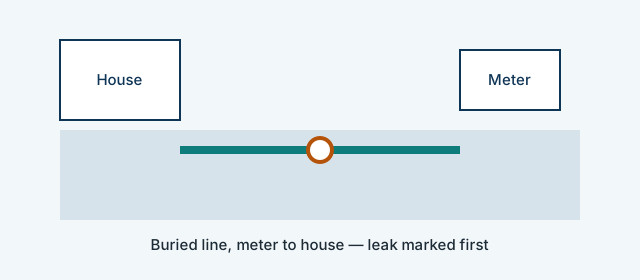
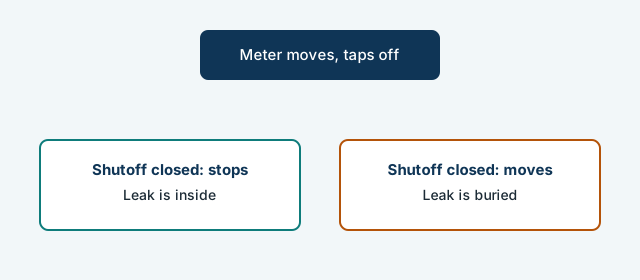
Underground water leak detection in Duluth, GA, in ZIP codes 30096 and 30097, finds a leak in the buried line from the meter to the house. We use the shutoff test first: if the meter stops, the leak is inside; if it keeps moving, it is buried.
An underground leak is a leak on the water service line that runs buried between the street meter and the house. It is the one leak type where the evidence is usually outside: the yard, not a wall or a floor. That changes the whole inspection. Inside checks such as wall moisture readings are of little use here, and the question is not which room, but which section of a buried line, and whether the leak is on your side of the meter at all.
Signs of an underground leak
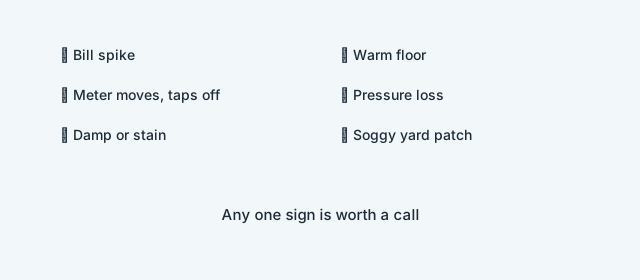
The most reliable sign is not a wet patch on its own, because rain, irrigation, and drainage can all wet a yard. The reliable pattern is a patch that stays wet or green when the rest of the yard dries, combined with a meter that moves. A bill spike with no inside dampness points the same way, because a yard leak can run for weeks without ever showing inside the house.
| Sign | What it suggests |
|---|---|
| Soggy or sunken patch in the yard | Water escaping from a buried line and saturating the soil above it |
| Unusually green strip of grass | A line of soil receiving constant water, often along the service line's path |
| Meter moves with house shutoff closed | A leak on the buried line, outside the house |
| Bill spike, no inside dampness | A leak that never reaches an inside surface |
| Low pressure across the whole house | A supply loss before water reaches the house |
| Water pooling near the meter or street | A leak near the meter end — check with the county before assuming responsibility |
Yard signs for underground water leak detection in Duluth, GA: bubbling, wet strips, and a spinning meter
Bubbling water in a yard, a wet or greener strip in grass, a soggy patch with no recent watering, and a meter that spins with everything off are the yard signs for a buried leak. A bill that rises with no change in use supports the same suspicion. Those signs point to a buried line, but they do not by themselves prove it, which is why the shutoff test and pressure and flow observations come before any digging is discussed.
Who needs underground leak detection
This page is for a Duluth homeowner or property manager whose meter moves with the house shutoff closed, or whose yard shows a persistent wet or green patch that rain and irrigation do not explain. It is also for someone whose bill has climbed while the inside of the house looks dry, because that combination is the classic underground pattern. If the meter stops when the shutoff is closed, the leak is inside and the water-line page is the right page, not this one. That distinction is the whole point of the isolation test, and it is worth doing before any yard work is authorised.
Underground detection is also the right step before any trench is dug. Digging to search for a buried leak is slow, damages landscaping, and often misses the leak, because water travels through soil before it surfaces. A narrowed, marked point lets a repair be discussed with a location in hand, including how much ground it would disturb and whether the line should be repaired or replaced in that section.
How underground leak detection works
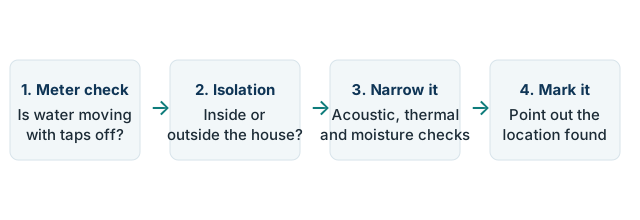
The inspection starts outside, at the meter, not inside the house. The meter and shutoff results you can provide on the call already narrow the job considerably, so bring them if you have them.
- Meter and isolation. Everything off, meter read, then read again. Then the house shutoff is closed and the meter is watched. Continued movement points to the buried line.
- Line path. The likely path from meter to house is traced from the meter position, the house entry point, and any visible markers or plans. A leak can only be narrowed if the line's path is understood first.
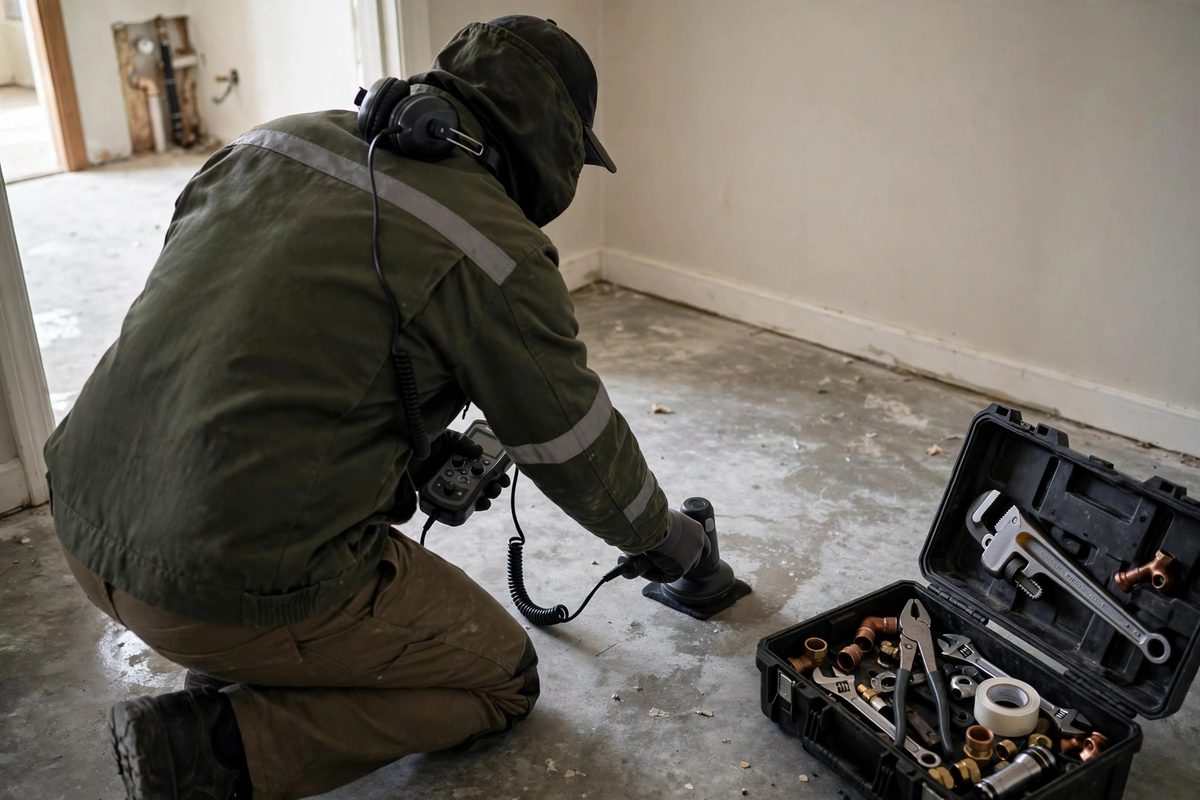
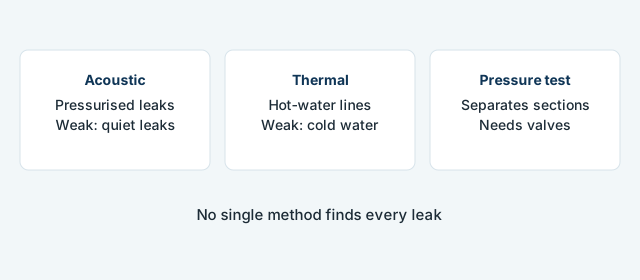
- Acoustic narrowing. Listening equipment is used along the line's path for the sound of pressurised water escaping. Depth, soil type, and background noise affect the signal, so the result is a narrowed section, not always a single point on the first pass.
- Pressure and section checks. Where access allows, sections of the line are pressure-tested to confirm which section loses pressure. This confirms the acoustic narrowing before a point is marked.
- Mark and explain. The narrowed point or section is marked, with an explanation of confidence, of who is responsible for that section, and of what a repair would disturb.
Methods for buried lines, and their limits
Buried lines are harder to narrow than inside pipes, and the limits should be stated plainly. Acoustic listening works best on a pressurised line with a clear signal, but deep burial, thick soil, and traffic or equipment noise can mask it. Pressure testing confirms a section but needs access points at both ends of that section. Thermal imaging, which is useful on a slab, is of little use on a buried yard line, because the ground surface temperature is affected by sun, shade, and rain. Tracer gas can help where acoustic and pressure checks cannot narrow the line, but it is a later step, not a first step, and it is discussed when it is needed rather than promised in advance.

Responsibility, and why it matters before digging
Before any digging is authorised, the section of line matters. Gwinnett County's published guidance says leaks on the homeowner's side of the meter are the homeowner's to repair. That is general county guidance, not a ruling on a particular property, and a leak near the meter or a shared boundary can be a different question. Ask on the call where the narrowed point sits relative to the meter, and check with Gwinnett County Water Resources if the point is near the meter or a boundary. Authorising a repair on the wrong side of that line is a cost that a detection inspection should prevent, not cause.
Inside leak compared with buried leak
| Test | Inside leak | Buried leak |
|---|---|---|
| Shutoff closed, meter stops | Yes — inside | No |
| Shutoff closed, meter moves | No | Yes — buried line |
| Main sign | Damp wall, warm floor, pressure loss | Wet yard, bill spike |
| Next check | Section pressure, acoustic, thermal | Line narrowing, acoustic, pressure |
What affects the cost of an underground inspection
No fixed price is published here, because no price has been supplied and national ranges are not Duluth prices. For a buried line, the fee moves with the length of line that has to be traced, the depth and soil conditions, how much of the line's path can be established from visible markers, whether pressure-testing access points exist, and whether a second visit is needed after rain or wet ground. Detection and any later digging or repair are priced separately. Ask on the call what the inspection includes — a marked point or section and an explanation — and what a repair would disturb, before any ground is broken.
When an underground leak is not the answer
A wet yard is not always a leak, and the inspection should be able to say so. Irrigation that runs too long, a downspout that discharges into a low spot, surface drainage that collects in a hollow, and a neighbour's runoff can all keep a patch wet without any pipe leaking. The difference is the meter: if the meter does not move with everything off and the house shutoff closed, there is no buried-line leak to find, however wet the yard looks. That ruling-out is a useful result, because it redirects the work to drainage or irrigation rather than to digging for a pipe that is not leaking. Conversely, a yard that looks dry in summer can still hide a leak, because dry soil can absorb a slow leak for weeks before a patch appears. In both cases, the meter and isolation tests are the decision, not the appearance of the grass.
After a point is marked, the next discussion is about the repair, not about more detection. Ask what the repair would open, whether the section would be repaired or replaced, how the ground would be restored, and whether any other section of the same line should be checked while the ground is open. Those questions belong after detection, because they depend on the marked point's depth, position, and responsibility — facts that only exist once the narrowing is done.
Safety and limits for underground leaks
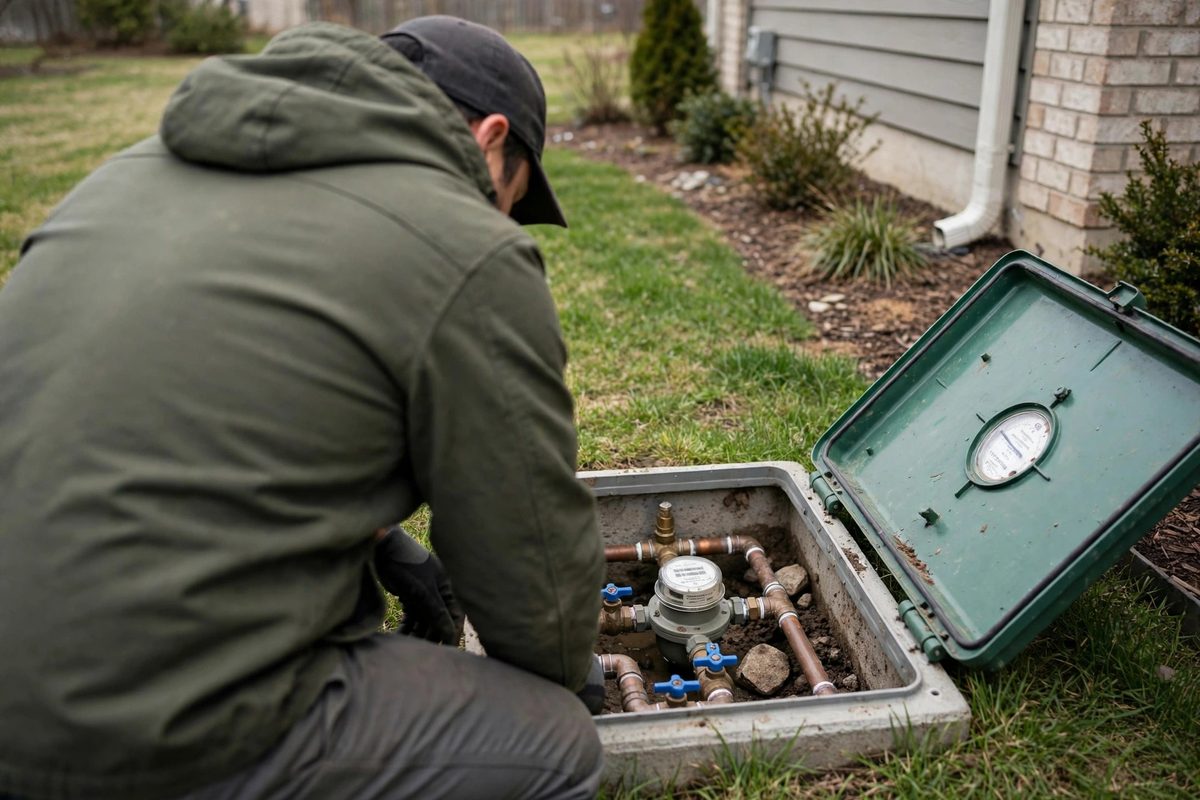
Do not dig to find a buried line yourself. Other buried services may be in the same ground, and a hand-dug search can damage a line or a service. If water is pooling near the street or the meter, or the ground is soft and sinking, keep clear of the area and call. If you smell gas, leave and call your gas utility or emergency services — a gas line is a different emergency and is not handled by this number. A wet yard patch that appears after heavy rain alone is not an underground leak until the meter test says otherwise.
Who carries out underground water leak detection in Duluth, GA
Underground water leak detection inspections are carried out by licensed and insured technicians. The business holds Georgia Master and Journeyman Plumber Licences, and its technicians include a Certified Leak Detection Specialist. The full list of licences and certifications is on the About page. Licence numbers are not published on this site — ask on the call if you need a number for your records.
Common questions about underground leaks in Duluth
How do I know if a leak is underground rather than inside?
The house-shutoff test is the separator. Turn everything off and watch the meter. Then close the house shutoff: if the meter stops, the leak is inside. If it keeps moving, the leak is likely on the buried line between the meter and the house. That one test decides whether this page or the water-line page answers your question.
What are the signs of an underground water leak?
A soggy or unusually green patch in the yard, a meter that moves with the house shutoff closed, a bill spike with no inside dampness, or a soft, sunken patch of ground along the line's path. A single wet patch after rain is not a sign on its own — the pattern to watch is a patch that stays wet or green when the rest of the yard dries.
Who is responsible for a leak on the buried line?
Gwinnett County's published guidance says leaks on the homeowner's side of the meter are the homeowner's to repair. That guidance is general county information, not a ruling on your property. The meter position and the line's path matter, so ask on the call and, if needed, check with Gwinnett County Water Resources before authorising work on a shared or boundary line.
Does underground detection mean digging up the yard?
Detection itself does not dig. It narrows the line to a marked point first, using acoustic and pressure checks along the line. Any digging that follows is part of a repair, discussed after the location is marked, and it should be limited to the marked area rather than a trench dug to search for the leak.
Can an underground leak be found in winter or wet ground?
Wet ground and rain make the job harder, because a wet yard patch is no longer a clear sign and acoustic signals can be masked. The meter and isolation tests still work in wet conditions, and they are the starting point in that case. A careful inspection will say when conditions prevent a confident narrowing, rather than guessing a point.
What should I tell you when I call about a yard leak?
Your ZIP code and street address, the meter result with the house shutoff open and closed, where the yard is wet or green, when the bill changed, and whether any recent digging or landscaping happened near the line. Those facts let the inspector know whether this is an underground question and which checks to start with.
How are underground water leaks detected?
First the meter test, then the house shutoff test: if the meter keeps moving with the house shutoff closed, the leak is likely on the buried line. Acoustic listening and pressure or isolation checks then narrow the section, and the agreed point is marked before any digging. Digging follows the mark, so the yard is not opened to search. Wet ground and winter conditions can weaken a method, so more than one check is used.
Call (770) 214-4798
Why underground water lines leak in Duluth, GA: soil movement, roots, joints, and age
Buried lines fail for ordinary reasons: soil movement that stresses a line, roots that press on or enter a joint, joints that weaken over time, and older lines that have simply had more cycles of use. No Duluth-specific soil statistic is claimed here, because none is verified for this business. The cause matters for detection, because it shapes where the line is traced and which checks are used, but the location still has to be narrowed by test, not assumed from the cause alone.
Underground water leak detection in Duluth, GA when there is no puddle
A buried leak does not always make a puddle. Soil can disperse water without surface water, so absence of a puddle does not rule out a buried leak. In that case the meter test, pressure and flow observations, and the pipe route with accessible fittings narrow the leak, followed by acoustic and pressure checks where they fit. If the meter moves with everything off and the house shutoff test points outside, a buried leak stays on the list even with a dry yard.
Before any digging: what to do while waiting for underground water leak detection in Duluth, GA
Do not dig to search for a buried leak. Digging without a marked location can damage the line further and widen the repair. Shut off the main valve if water is showing and it is safe to reach, keep clear of wet ground that feels unstable, and call with your ZIP code, your symptoms, and your meter result. Responsibility for the buried line, and why it matters before digging, is covered on this page, and it is confirmed on the call before any work starts.
Underground water leak detection in Duluth, GA: ruling out irrigation first
Irrigation is a branch to check, not a service offered here. If the house shutoff is on, everything is off, and the meter moves, closing the irrigation valve and rechecking the meter separates an irrigation leak from a buried supply leak: if the meter stops, the leak is irrigation. That isolation step prevents a buried-line search for a leak that is in the irrigation system, and it is done before a buried conclusion is drawn.