 Duluth Water Leak Detection Pros
How Water Leak Detection Works in Duluth, GA
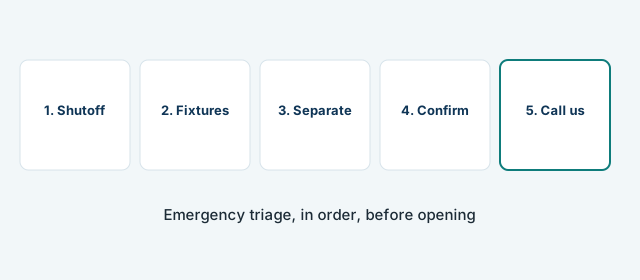
Water leak detection in Duluth, GA works in four steps: check the meter, isolate inside or outside, narrow the area with acoustic and thermal checks, and mark the leak point. We do not open a floor or wall first. We mark the location, then explain what repair would open.
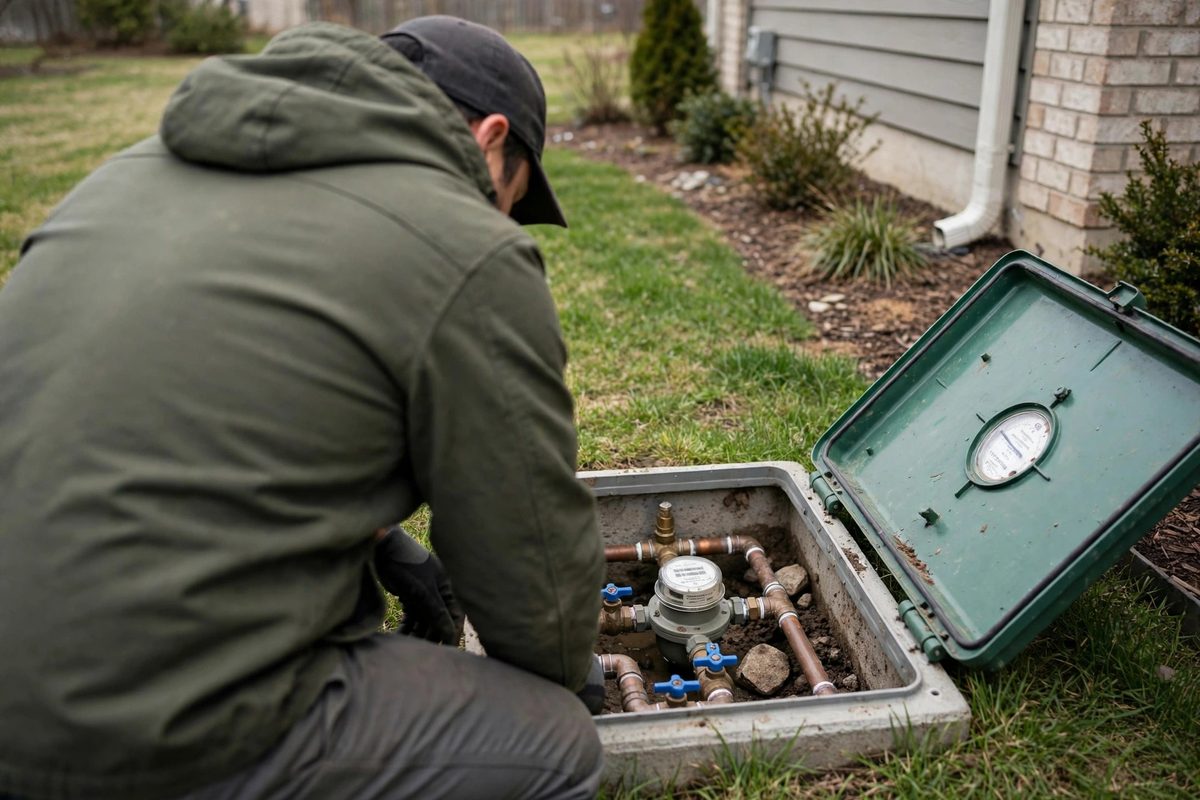

Step 1 — The meter test you can do yourself
Turn off every tap, appliance, toilet cistern, and irrigation control. Note the meter reading, including the leak indicator if your meter has one. Wait without using water — 30 to 60 minutes is a common check, and up to two hours gives a clearer result for a slow leak — then read the meter again. If it has moved, water is escaping somewhere. If it has not moved, the problem may be usage, a single appliance, or a billing question rather than a concealed leak. Gwinnett County Water Resources publishes the same guidance for its customers, and the FAQs page links to it.
Step 2 — Isolation: inside or outside?
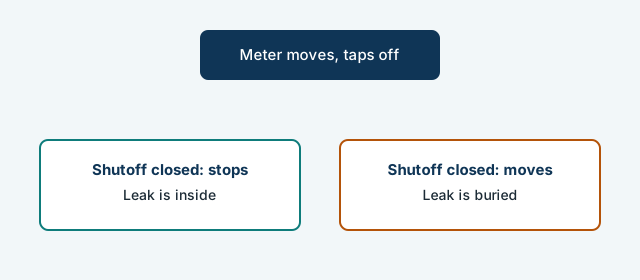
Close the house shutoff valve. If the meter stops, the leak is inside the house — a water-line, wall, slab, or ceiling question. If the meter keeps moving, the leak is likely on the buried line between the meter and the house — an underground question. That one test decides which service answers your question, and it is the test the inspector will start from when you call.

Hot water, cold water, house, yard and irrigation: what isolation separates in Duluth, GA
Step 2 isolation separates more than inside from outside. It separates hot water from cold water, house from yard, and supply from irrigation where that distinction fits, by closing a section and rechecking the meter. Irrigation is a branch to check, not a service offered here. A valve that does not close fully makes the test inconclusive, and that is stated plainly rather than treated as a clear result. Section isolation is what turns a general suspicion into a narrowed line to check.
Step 3 — Narrow the area
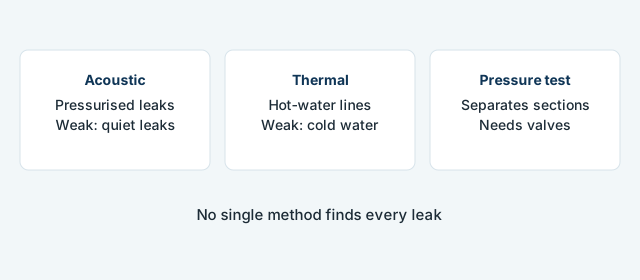
With the side of the leak known, the inspector uses the checks that fit the symptoms. Acoustic listening picks up the sound of pressurised water escaping, but is affected by depth, background noise, and pipe material. Thermal imaging shows temperature patterns and works best on hot-water lines; it is weaker on cold-water leaks and it does not see through walls. Moisture readings show how far damp has spread. Pressure testing separates sections of pipe. Tracer gas and camera checks exist for cases where the standard checks cannot narrow the area. No single check finds every leak, and a careful inspection will say so when it cannot confirm a location rather than guessing.
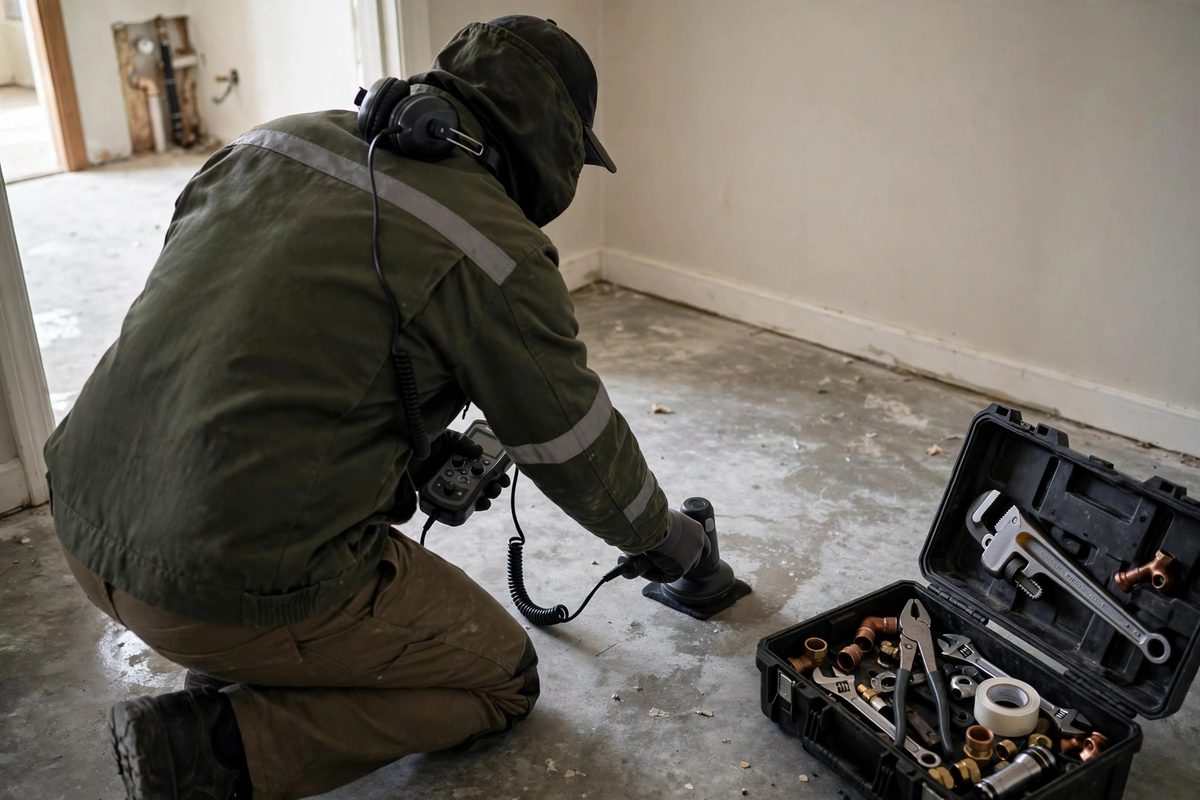
Step 4 — Mark the location and explain the next step
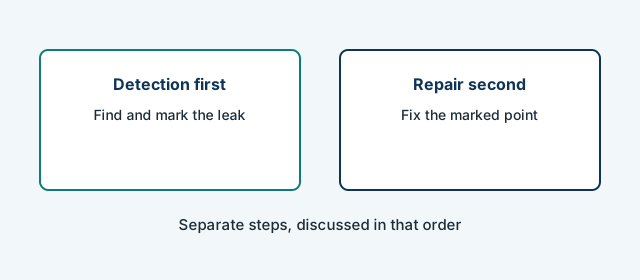
The point found is marked and explained in plain terms: what was found, how it was narrowed, and what the next step is. Detection and repair are separate steps. What happens next — repair, rerouting, or referral to another trade — depends on the leak and is discussed after the location is known, not sold before it. Ask what any repair would open up and what it costs before any work starts.
Who carries out each step
Each step above is carried out by licensed and insured technicians, under Georgia Master and Journeyman Plumber Licences, with a Certified Leak Detection Specialist on the team. The full licence list is on the About page.
Detection versus repair, honestly
| Detection does | Detection does not do |
|---|---|
| Find and mark the location of a hidden leak | Repair the pipe, reroute a line, or replace a section — those are separate decisions |
| Explain how the location was narrowed and what the checks showed | Promise a location when the checks cannot confirm one |
| Separate an inside leak from a buried-line leak | Cover gas, roof, pool, sewer, or drain problems |
| Give you a clear next step after the location is known | Guarantee a price, a response time, or a result before the inspection |
Safety first
If water is spreading, a ceiling is sagging, or you hear a steady rush inside a wall, shut off the main water valve if it is safe to reach, keep clear of wet electrical outlets and switches, and call. Do not touch wet electrics. If you smell gas, leave the property and call your gas utility or emergency services — that is a different emergency and is not handled by this number.
Signs that start a water leak detection in Duluth, GA
A detection starts with a sign, not with a method. The signs that start it are a bill that spikes with no change in use, a sound of running water with everything off, a warm or damp spot on a floor, a meter dial that keeps spinning, a musty smell or staining or bubbling paint, a soggy patch or greener strip in a yard, and pressure that drops in only part of a house. Those signs are read together with the meter test, because one sign alone does not name the location.
Water bill spiked with no change in use
A bill spike with no change in use is often the first sign, because it is measured, not guessed. Compare volume as well as charge, check the days covered, and check whether the reading was estimated or actual, before assuming a buried leak from a single high bill.
Sound of running water when everything is off
Running water heard with every tap off points toward a flowing leak, and acoustic listening follows that sound. A silent property does not rule out a leak, because quiet leaks are weaker for acoustic listening, so sound is combined with the meter test and other checks.
Warm or damp spot on the floor
A warm or damp spot on a floor points toward a slab or under-floor line, especially where hot water is involved. Thermal imaging helps with hot water, and is weaker on cold water, so a warm spot is a narrowing clue, not a marked point on its own.
The water meter leak dial keeps spinning
A leak dial that keeps spinning with everything off confirms flow in the system. That result starts the isolation step, because it does not by itself say whether the leak is inside, under a floor, or buried outside.
Musty smell, stains, or bubbling paint
A musty smell, staining, or bubbling paint shows where water has reached, not necessarily where it started. Those signs are combined with the meter test and the three-way wall, ceiling, and condensation split before a supply leak is claimed.
Soggy patch or a greener strip in the yard
A soggy patch or greener strip in a yard points toward a buried line, but soil can also disperse water without surface water, so a dry yard does not rule out a buried leak. The shutoff test decides inside from outside before any digging is discussed.
Low water pressure in just part of the house
Pressure that drops in only part of a house points toward a line serving that part, rather than a whole-property supply problem. That sign, combined with the meter test, is where section isolation starts.
What happens if the checks do not agree in Duluth, GA
If the checks do not agree, the marked location is less certain, and it is stated as inconclusive. No wall, floor, or ground is opened on a guess, and the inspection explains which checks agreed, which did not, and what further checks would be needed. An inconclusive result is not a failed visit: it prevents an opening in the wrong place, and it is the honest result when the evidence does not support a point.
Check your water bill history before a water leak detection in Duluth, GA
Before assuming a buried leak, check your water bill history. Look at volume as well as charge, the days covered, and whether the reading was estimated or actual, and consider changes in occupancy, irrigation schedules, and appliance use that can explain the pattern. A single high bill, without that history and without a meter test, is not enough to call a leak buried, and it is not enough to choose a service.
How a leak with no surface water is found in Duluth, GA
A leak with no surface water is found by pressure and flow observations compared with the pipe route and accessible fittings, then by acoustic, thermal, and pressure checks where they fit. Soil can disperse water without a puddle, so absence of a puddle does not rule out a buried leak. If the meter moves with everything off and the house shutoff test points outside, a buried leak stays on the list even with a dry yard, and digging is still not discussed until a point is marked.
Visual guides
Diagrams that summarise the pages above — all are illustrations, not photographs of jobs.