 Duluth Water Leak Detection Pros
Can Tree Roots Damage Underground Water Lines in Duluth?
Tree roots in Duluth, GA, in ZIP codes 30096 and 30097, mainly damage sewer and drain lines, not water supply lines — and that distinction matters. Water-line root damage is rarer, because supply lines are pressurised and usually intact. A leak near a tree still needs checking.
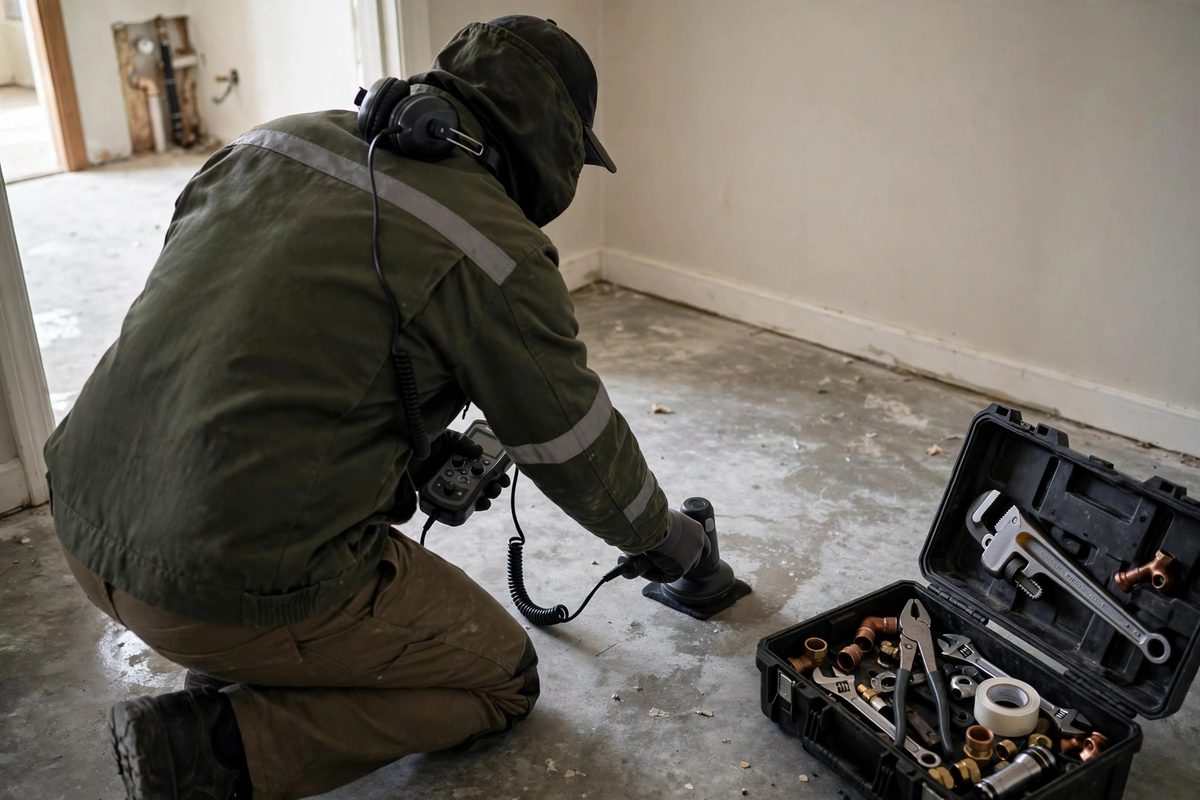
“Tree roots” is the first explanation most people reach for when a yard leak appears near a tree, and it is often wrong for a water line. Roots seek water, and they enter pipes through existing cracks and joints — they do not usually break a sound, pressurised supply pipe on their own. Sewer and drain lines, which are not pressurised and have more joints, are far more vulnerable. That is why a root problem is usually a drain problem, and why a water-line leak near a tree needs narrowing before roots are blamed.
Why roots affect drains more than water lines
| Pipe type | Pressurised? | Root risk | Why |
|---|---|---|---|
| Water supply line | Yes | Lower | Pressure pushes water out, not roots in; entry needs an existing crack |
| Sewer / drain line | No | Higher | More joints, no pressure, and a steady water source inside |
| Irrigation line | Intermittent | Moderate | Shallow, with joints that roots can exploit |
The table is the honest summary. A water line can be damaged by roots — a large root can shift soil, stress a joint, or exploit a crack that already exists — but it is the exception, not the rule. A yard leak near a tree is more likely to be a joint failure, a corroded section, or ground movement, with the tree as a bystander. The inspection narrows the leak first, and only then asks whether roots played a part.
Signs that point toward, and away from, roots
Signs that point toward roots include a leak very close to a large tree, a history of drain blockages in the same property, and a leak that returns after a repair in the same area. Signs that point away include a leak far from any tree, a leak on a new line with no root history, and a meter that moves in a pattern that matches a supply failure rather than a root intrusion. None of these signs proves a cause on their own — they narrow the questions, and the narrowing checks decide.
What not to do matters here too. Do not cut a tree down on the assumption that it caused a water leak. Tree removal is expensive, permanent, and often beside the point if the leak is a joint failure. Find the leak first, find the cause second, and only then decide what, if anything, happens to the tree.
What detection does for a suspected root leak
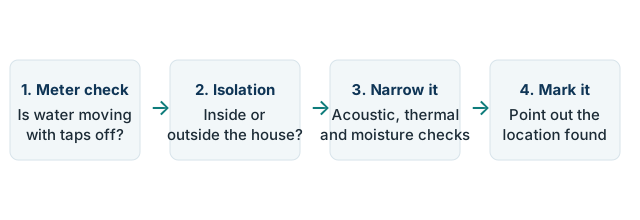
Detection for an underground line follows the same sequence as any underground leak: meter test, isolation where valves allow, acoustic listening, and marking the point several checks agree on. The difference for a suspected root leak is in the follow-up questions: once the point is marked, the repair discussion can consider whether roots are present at that point, and whether root management — not just pipe repair — is part of the fix. That discussion is for the repair stage, not the detection stage, and detection does not claim to see roots underground.
If the marked point turns out to be a sewer or drain line, not a water line, the inspection has still done useful work: it has ruled out a supply leak and pointed to the drain trade. That ruling-out is stated plainly, because a false water-line location is worse than an honest referral. The dedicated service page is underground water leak detection.
Tree roots and underground lines in Duluth, GA
Duluth's tree cover is part of what makes its neighbourhoods attractive, and it is also why root questions come up often. The practical advice is simple: plant new trees away from known line routes where you can, keep an eye on drain performance as an early root warning, and treat a yard leak near a tree as a leak first and a root question second. The leak is found by narrowing; the root question is answered at the marked point, not before it.
Preventing root damage without harming trees
Prevention for root damage is mostly about placement and monitoring, not about chemicals or barriers that are often oversold. When planting new trees, keep them away from known line routes where you can — the line route is usually knowable from the meter location and the house entry point, and a plumber or the water provider can help confirm it. Choosing species is a question for an arborist, not for a leak guide, and no species is guaranteed root-safe; the honest advice is to ask an arborist about root behaviour for the species you are considering, in your soil, rather than trusting a label.
Monitoring is the other half of prevention, and it is mostly about drains. Drain performance is an early root warning: slow drains, recurring blockages in the same line, and gurgling are signs that roots may be entering a drain line, and they are worth acting on before a blockage becomes a backup. A drain issue found early is a drain specialist's job, and it is cheaper and less disruptive than a drain issue found late. Water lines, by contrast, give little early warning from roots — which is another reason a yard leak near a tree should be narrowed by detection, not assumed to be roots.
What not to do for prevention matters too. Do not pour root-killing chemicals into a line on speculation, do not cut roots around a line without knowing where the line is, and do not remove a healthy tree on the assumption that it will one day cause a leak. Each of those actions has costs — to the line, to the tree, or to both — and none of them substitutes for knowing where your lines actually run and watching for the signs that matter.
What to ask when a yard leak is near a tree
When a yard leak is near a tree, four questions help the inspection more than any assumption about roots. How far is the leak from the tree, and how large is the tree? Has this property had drain blockages before, and where? What material is the water line, and how old is it? And what does the meter do with everything off — does it move steadily, intermittently, or not at all? Those four answers, given on the call, let the inspection start with narrowing rather than with a root theory, and they often point away from roots before any digging is discussed.
One more question is worth asking: has the ground around the leak been disturbed recently — new planting, new paving, construction, or heavy vehicle traffic? Ground disturbance stresses joints and shifts soil, and it is a common trigger for a joint failure that is then blamed on the nearest tree. A leak that follows disturbance is more likely a joint story than a root story, and the repair discussion should reflect that. Roots, disturbance, and joint failure can all coexist, but they are not the same cause, and the inspection separates them by narrowing to a point first.
Common questions
Do tree roots cause water line leaks?
Rarely on their own. Roots enter pipes through existing cracks and joints, and supply lines are pressurised, which pushes water out rather than letting roots in. Sewer and drain lines, which are not pressurised and have more joints, are far more vulnerable. A water-line leak near a tree needs narrowing before roots are blamed.
Should I cut down a tree near a yard leak?
No, not on assumption. Tree removal is expensive and permanent, and often beside the point if the leak is a joint failure or corrosion. Find the leak first, find the cause second, and only then decide what, if anything, happens to the tree.
How can I tell if a yard leak is a water line or a drain line?
The meter test is the first separator: a supply leak moves the meter with everything off, while a drain leak does not, because drains are not pressurised. Detection then narrows the point, and the line type at that point decides which trade repairs it.
Can detection see tree roots underground?
No. Detection marks a leak point using the meter, isolation, acoustic, thermal, and moisture checks. Whether roots are present at that point is a repair-stage question, answered when the point is opened, not a detection-stage claim.
What if the leak turns out to be a drain line?
Then the inspection has still done useful work: it has ruled out a supply leak and pointed to the drain trade. That ruling-out is stated plainly rather than dressed up as a water-line location, because a false location is worse than an honest referral.